
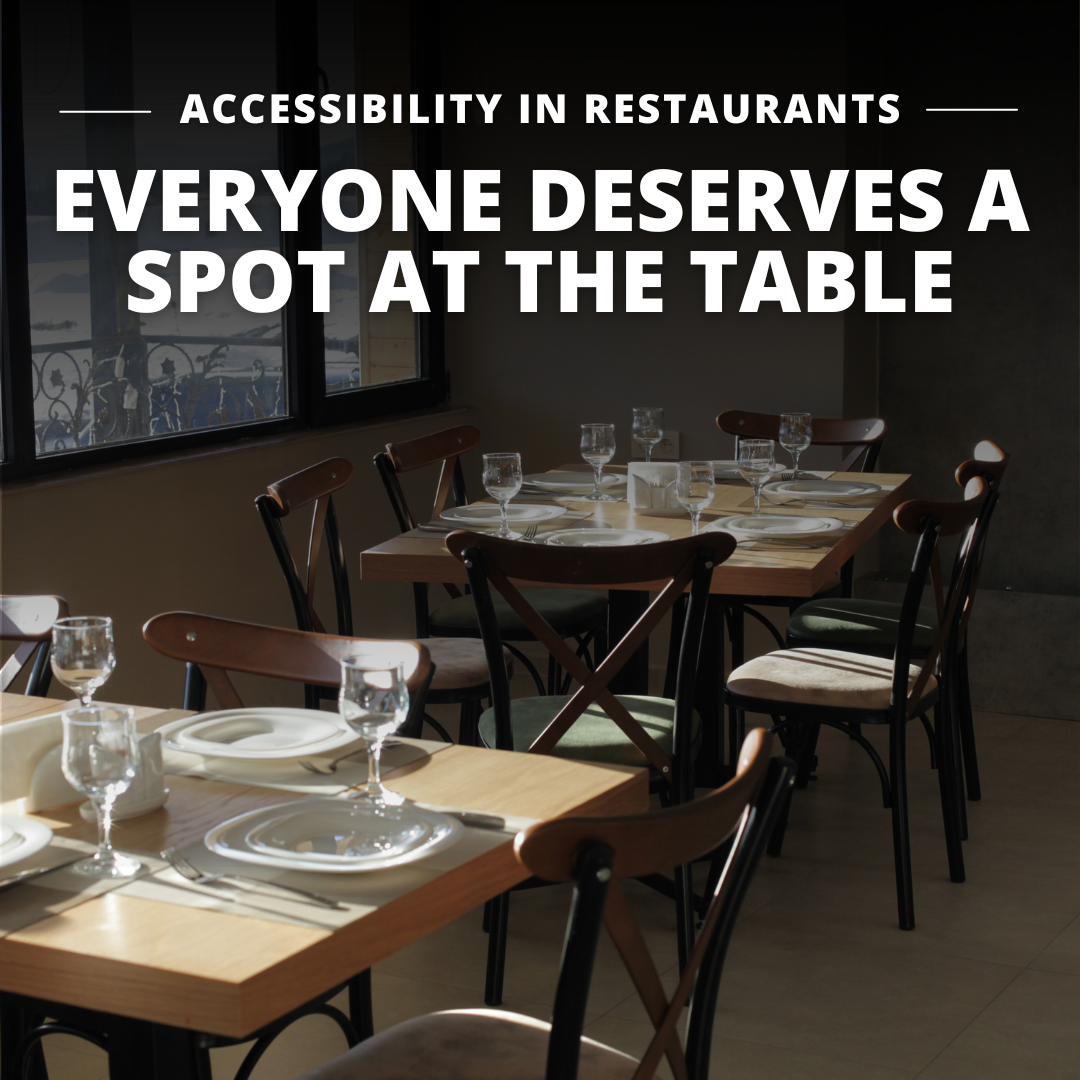
Accessibility in Restaurants: Everyone Deserves a Spot at the table
Let’s dive into one of the main reasons I started Victoria Taste Buds: accessibility in restaurants. I believe that creating spaces that are welcoming and inclusive for everyone is not just good practice; it’s essential for fostering a vibrant dining culture that embraces diversity in all its forms. This is precisely why I make a point to include an accessibility section in all of my reviews. Through my own experiences, I’ve come to recognize that when I research a restaurant prior to visiting, the food itself only constitutes about 10% of what I seek. The remaining 90% revolves around assessing the accessibility of the venue and determining whether I’ll feel at ease during my dining experience.
So, what exactly do I mean by accessibility? Well, in my eyes, it’s about making sure that restaurants are sensible, meaningful, and usable for as many people as possible. It’s about going beyond the basics of ramps and wide doorways to consider every aspect of the dining experience, from physical spaces to digital interfaces. When crafting my reviews, I consider various facets of accessibility physical, sensory, digital, affordability, and logitical.
Let’s start with the physical accessibility of a restaurant. When I visit a new place, I always take note of whether there’s a clear path for non-ambulatory customers to enter and move around comfortably. Are the tables spaced out enough to accommodate wheelchairs or walkers? Is there a good mix of high and low seating options, or are all the accessible tables tucked away in a corner? If there are self-serve items ( like water, cups & lids, napkins etc.) can they be reached by all? How high or low are the counters?
But it’s not just about physical barriers. As someone sensitive to sensory stimulation, I also pay close attention to the atmosphere of a restaurant. Is it a cozy nook or a bustling hub? How loud is the music? How close are the tables? These details matter because they can greatly impact someone’s dining experience, especially those with sensory sensitivities or anxiety.
Transitioning to the digital realm, accessibility extends to online. As a visual learner and someone who gets anxious about asking too many questions, I rely heavily on restaurant websites and social media channels. This allows me to preview menus, get a feel for the ambiance, and clear up any questions I might have about items. But it can be frustrating when a restaurant’s Instagram page is devoid of food photos or when its website is clunky and hard to navigate. Ensuring that digital platforms are user-friendly and informative is just as important as making physical spaces accessible.
Of course, accessibility also extends to affordability. As someone on a budget, I always appreciate it when restaurants offer happy hour specials or affordable options on their menu. Money shouldn’t be a barrier to enjoying good food and company, and I believe that every diner should feel welcome regardless of their financial situation.
Finally, let’s not forget about the logistics of getting to a restaurant. In a city like Victoria, where a lot of people rely on public transportation, knowing which bus routes are nearby can make all the difference. And for those who drive or bike, having clear information about parking options is crucial for reducing stress and anxiety.
By evaluating and speaking to these aspects of accessibility, I aim to provide comprehensive insights that empower diners to make informed decisions about where to enjoy their next meal and how to comfortably visit establishments.
Accessibility isn’t just a buzzword; it’s a mindset that should inform every aspect of the dining experience. By prioritizing inclusivity and taking proactive steps to remove barriers, restaurants can create environments where everyone feels valued and welcome. Because at the end of the day, everyone deserves a spot at the table.